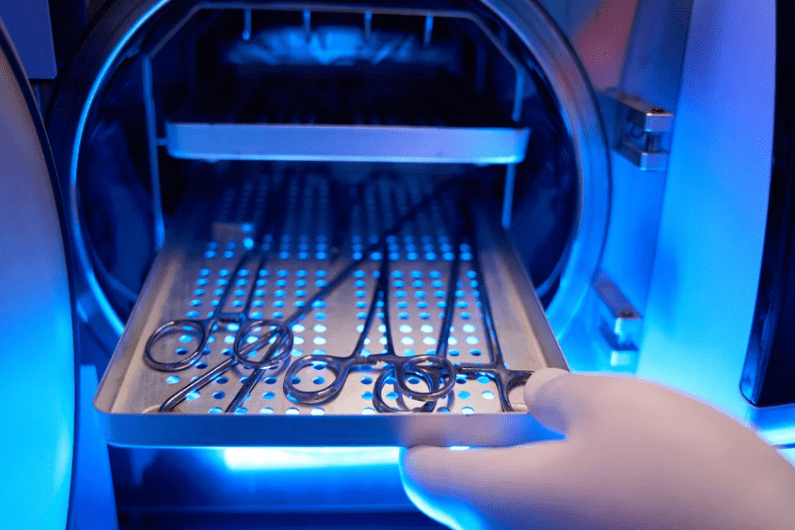
In the world of pharmaceutical manufacturing, every component that meets the product must be sterile, not just clean, but completely free from viable microorganisms. Achieving this level of sterility is a science built on precision, validation, and engineering excellence. At the heart of this process lies one of pharma’s most trusted allies the steam sterilizer, commonly known as the autoclave.
But what happens inside the chamber during a sterilization cycle? How does steam a simple phase of water become a powerful agent of microbial destruction? Let’s take a closer closer look inside.
The Science of Steam: Why Moist Heat Works
Steam sterilization works on the principle of moist heat under pressure, a method proven to be both effective and efficient for a wide range of pharmaceutical applications. The real power of steam lies not in its temperature alone, but in its latent heat of condensation.
When steam meets a cooler load surface, it condenses back into water. During this phase change, it releases a large amount of energy this latent heat quickly penetrates the load, destroying microorganisms by denaturing proteins and disrupting cellular enzymes.
Unlike dry heat, which relies solely on surface heating, moist heat ensures uniform energy transfer, making it far more effective for complex or porous materials.
Inside the Autoclave: Step by Step Process
The working of a pharmaceutical grade steam sterilizer is a carefully controlled sequence of stages, each serving a specific purpose to ensure complete and verifiable sterilization.
- Air Removal
Air is the enemy of steam sterilization. Any residual air inside the chamber prevents uniform heat transfer.
Autoclaves use methods like gravity displacement, steam pulsing, or vacuum pre-evacuation to remove air before the sterilization phase begins.
- Gravity displacement allows steam to push air out through a vent.
- Vacuum-assisted systems use pumps to evacuate air, ensuring faster and more thorough penetration for complex loads.
- Steam Admission & Heating
Once air is removed, saturated steam (at approximately 121°C and 15 psi or higher) is introduced into the chamber.
The steam uniformly fills the chamber, transferring energy rapidly to every surface. Sensors continuously monitor pressure and temperature to maintain cycle precision.
- Sterilization or Hold Phase
This is the critical phase where actual sterilization occurs. The chamber maintains the target temperature and pressure for a specified holding time typically 15 to 30 minutes depending on load type and bioburden.
During this time, the combined effect of temperature, pressure, and exposure duration achieves the desired microbial kill rate, measured as the Sterility Assurance Level (SAL).
- Exhaust and Drying
After sterilization, the steam is released gradually to prevent load damage.
A vacuum phase is often applied to remove moisture and dry the load completely, preventing recontamination from residual condensate.
Critical Parameters That Define Performance
The reliability of a steam sterilizer depends on how well it maintains and controls several key parameters:
- Temperature: Typically, 121°C (standard cycle) or 134°C (rapid cycle).
- Pressure: Directly linked to temperature; ensures steam remains saturated.
- Steam Quality: Ideally, steam should contain 3–5% moisture (saturated steam). Too dry or too wet steam reduces sterilization efficiency.
- Time: Adequate exposure ensures complete microbial inactivation.
- Air Removal Efficiency: Determines whether steam can reach all load surfaces.
Even small deviations in these parameters can lead to incomplete sterilization or failed validation results.
Validation: Proving Sterility Beyond Assumption
In pharmaceutical manufacturing, assumptions don’t count proof does.
Autoclave cycles must undergo rigorous qualification and validation:
- Design Qualification (DQ): Confirms that the system design meets GMP and process requirements.
- Installation Qualification (IQ): Verifies installation as per approved design.
- Operational Qualification (OQ): Ensures all functions (controls, sensors, valves) operate correctly.
- Performance Qualification (PQ): Demonstrates consistent sterilization under real load conditions using biological and chemical indicators.
This process ensures that every sterilization cycle is reproducible, traceable, and compliant with cGMP, ISO 17665, EN 285, and FDA 21 CFR Part 211 standards.
Automation and Intelligence in Modern Sterilizers
Today’s autoclaves are not just pressure vessels they are digitally intelligent systems.
Automated PLC based controls manage every parameter in real time, supported by:
- Recipe based cycles for different load types
- Data logging for batch traceability
- Alarm systems and fail safes
- 21 CFR Part 11compliant audit trails
This intelligent automation ensures repeatability, reduces operator dependency, and provides validated digital records for regulatory audits.
Beyond Equipment: Engineering for Assurance
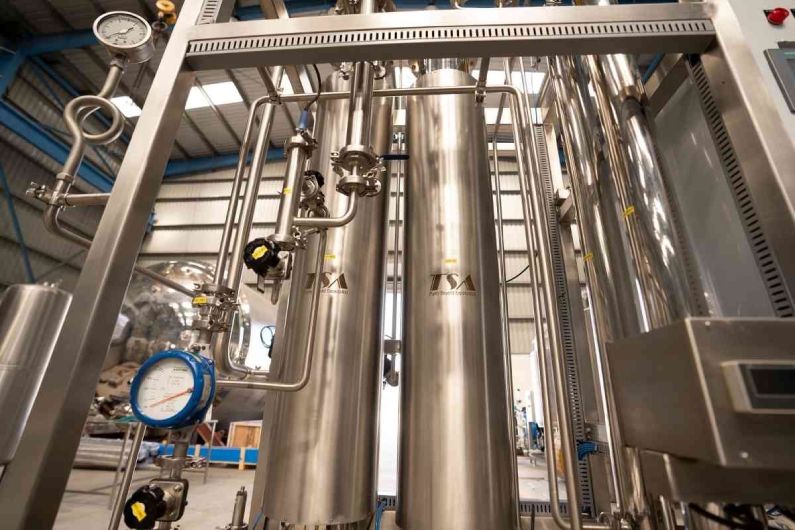
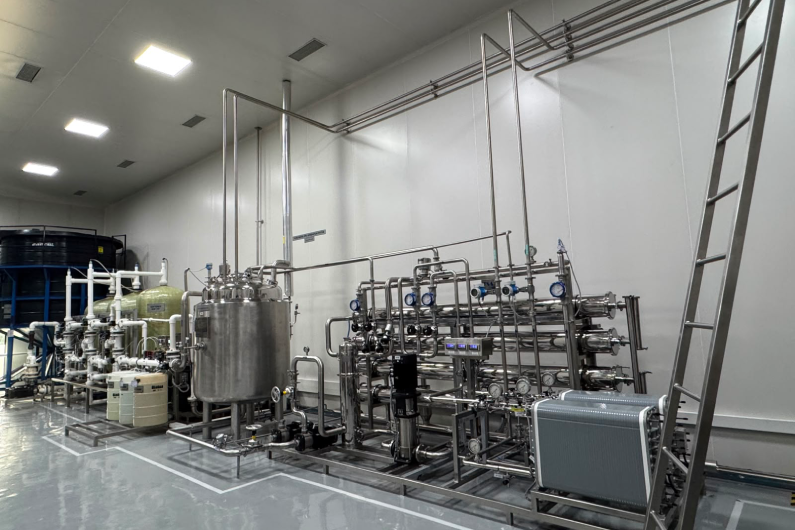
In high-purity environments, sterilizers must integrate seamlessly with the rest of the clean utility system from pure steam generators to condensate handling and cleanroom validation.
Hygienic design, polished chamber surfaces, and sanitary piping minimize contamination risk while ensuring efficient cleaning and maintenance.
Conclusion: Precision in Every Pulse of Steam
Inside the stainless-steel chamber of an autoclave lies a perfect balance of physics, microbiology, and engineering.
Each pulse of steam is calculated, every degree of temperature controlled, every droplet accounted for all to ensure one outcome: absolute sterility.
In pharmaceutical manufacturing, where patient safety depends on unseen details, the steam sterilizer stands as a symbol of precision, validation, and trust proving that even something as simple as steam, when engineered with purpose, becomes a force of purity.