Terminal Sterilizer and Its Importance

The Science, Significance, and Strategic Impact on Product Safety

In the pharmaceutical industry, sterility is not a feature, it is a fundamental requirement. Among the various sterilization strategies available, terminal sterilization remains one of the most robust and regulatory-preferred methods for liquid injectable products filled in sealed containers such as ampoules, vials, and bottles.

Despite advancements in aseptic processing, terminal sterilization continues to be the gold standard whenever product stability allows. Its impact extends far beyond microbial destruction influencing regulatory confidence, product shelf life, operational efficiency, and patient safety.

What Is Terminal Sterilization?

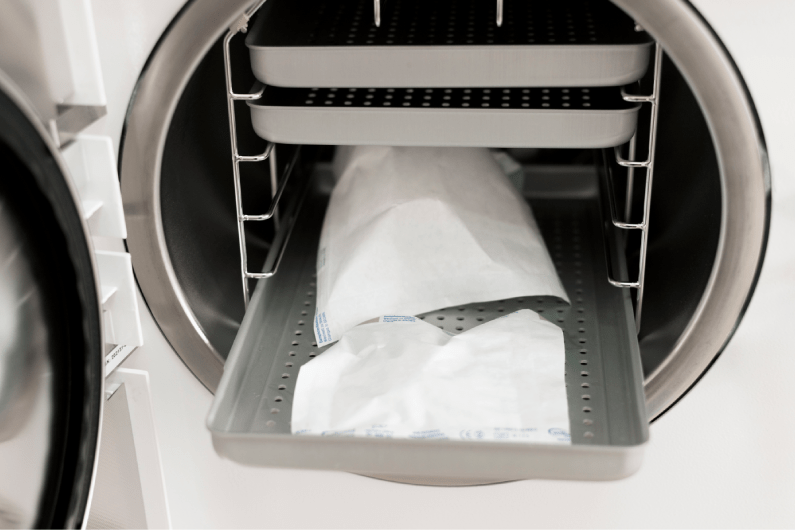
Terminal sterilization refers to the process of sterilizing a product in its final, sealed container. Unlike aseptic processing where sterilized components are assembled in a controlled environment terminal sterilization ensures that the filled and sealed product undergoes a validated sterilization cycle that achieves a Sterility Assurance Level (SAL) of 10⁻⁶.

This approach provides an additional layer of sterility security because any potential contamination introduced during filling is effectively eliminated during the final sterilization cycle.

Why Regulatory Authorities Prefer Terminal Sterilization

Regulatory agencies such as the U.S. Food and Drug Administration and the European Medicines Agency consistently recommend terminal sterilization whenever feasible.

The reason is simple:
Terminal sterilization is inherently more reliable than aseptic processing because:

  • It sterilizes the final product in its sealed state.
  • It reduces reliance on environmental controls alone.
  • It provides measurable, reproducible lethality through validated thermal cycles.
  • It offers stronger sterility assurance with lower risk of human intervention errors.

In regulatory audits, products that are terminally sterilized often face fewer sterility-related observations compared to aseptically filled counterparts.


 Engineering Behind a Terminal Sterilizer

A pharmaceutical-grade terminal sterilizer is far more advanced than a standard autoclave. It is specifically engineered to sterilize liquid loads safely while protecting container integrity.

  1. Uniform Heat Distribution

Uniform temperature penetration is critical to avoid cold spots. Advanced circulation systems, spray mechanisms, and load configuration engineering ensure consistent lethality throughout the chamber.

  1. Dynamic Overpressure Control

Liquids expand when heated, increasing internal container pressure. Without proper counter-pressure, glass vials or plastic bottles may crack or deform. Modern systems dynamically regulate chamber pressure during heating and cooling phases to maintain container integrity.

  1. Precision PLC Automation

PLC-based control systems monitor:

  • Temperature profiles
  • Pressure gradients
  • F₀ calculations
  • Time-dependent lethality

This ensures reproducible cycles and complete batch traceability.

  1. Heat Recovery & Sustainability

Energy-efficient sterilizers integrate heat recovery systems to reduce steam and cooling water consumption, aligning with sustainability goals and reducing operational costs.

  1. Validation & Compliance Support

Integrated temperature mapping ports, leak testing systems, and automated data recording simplify IQ/OQ/PQ validation processes, ensuring audit readiness.

The Science of Sterility Assurance

Sterilization is not merely about reaching a temperature it is about delivering adequate microbial lethality.

The F₀ value quantifies sterilization effectiveness, but achieving the target F₀ alone is insufficient if:

  • Heat distribution is uneven
  • Air pockets exist
  • Load patterns are not validated
  • Container integrity is compromised

True sterility assurance requires a holistic approach integrating engineering design, process validation, and regulatory compliance.

Terminal Sterilization vs. Aseptic Processing

Parameter

Terminal Sterilization

Aseptic Processing

Sterility Assurance

Very High

High but environment-dependent

Risk of Human Error

Lower

Higher

Regulatory Preference

Preferred when feasible

Used when heat-sensitive

Operational Complexity

Moderate

High

Cost of Failure

Lower risk

High recall risk

When product formulation allows thermal exposure, terminal sterilization remains the safer and more defensible approach.

Impact on the Pharmaceutical Industry

1️⃣ Enhanced Patient Safety

Terminal sterilization significantly reduces the probability of viable microorganisms reaching patients particularly critical for injectable therapies.

2️⃣ Reduced Recall Risk

Robust sterility assurance lowers the likelihood of microbial contamination-related recalls, protecting brand reputation.

3️⃣ Regulatory Confidence

Facilities utilizing validated terminal sterilization processes demonstrate stronger compliance posture during inspections.

4️⃣ Operational Efficiency

Automation and heat recovery systems improve productivity while controlling utility consumption.

5️⃣ Long-Term Cost Optimization

Though initial capital investment may be higher, lifecycle costs are often lower due to reduced deviations, recalls, and contamination events.

The Future of Terminal Sterilization

As pharmaceutical manufacturing evolves toward greater automation and digitalization, terminal sterilizers are becoming smarter:

  • Advanced data analytics
  • Remote monitoring
  • Integrated SCADA systems
  • Real-time cycle optimization
  • Energy benchmarking

Future-ready sterilization systems will not only ensure sterility but also support data integrity and sustainability objectives.

Conclusion

Terminal sterilization is more than a compliance requirement it is a strategic safeguard for pharmaceutical manufacturers. It strengthens sterility assurance, reduces regulatory risk, enhances product safety, and improves operational efficiency.

In an industry where patient safety is paramount, terminal sterilization represents the most definitive line of defense against microbial contamination.

When formulation permits, it is not merely an option it is the standard to aspire to.
Share this post:

For 20 years, we’ve been the go-to problem-solvers for high-purity and injectable process applications in the pharma and biopharma industry. We are relentless about continuous process improvement and upskilling, elevating ourselves and our technology so you can get the job done more efficiently with cost optimisations. Use the form below to schedule a call back from our team.

Name(Required)
Address
This field is for validation purposes and should be left unchanged.

Hetal Panchal is the Vice President in Operations department of TSA Process Equipments (A Thermax Group Company) since 1 s t October 2012.

Holding a qualification in Production Engineering and 28 years of industry experience, he specializes in designing advanced equipment for the pharmaceutical sector. His expertise lies in optimizing production lines, improving efficiency, and ensuring compliance with regulatory standards.
Focused on innovation, he has developed systems that enhances productivity, minimizes downtime, and maintains product quality. Staying current with technological trends, they contribute to ongoing improvements in the industry.
His extensive experience has helped identify opportunities for innovation, streamlining operations and reducing costs. Through his specialized knowledge, more efficient manufacturing processes and higher-quality outputs in pharmaceutical production are delivered.

B.C. Mahesh is the Chairperson of TSA Process Equipment Pvt. Ltd. since Feb 2024.

B.C. Mahesh became a member of the Executive Council in August 2013. He is responsible for the Industrial Product Business (IPB), which consists of Process Heating, Absorption Cooling & Heating Solutions, Water and Waste Solutions, Air Pollution Control, Steam Engineering, Channel Business Group, International Business Group, and Enterprise Sales businesses.
As part of IPB, he also oversees the following wholly-owned subsidiaries
of Thermax – Danstoker, PT Thermax International Indonesia and Rifox.Mahesh joined Thermax as a graduate trainee in 1988 and handled the Materials function for various businesses, including global sourcing, till 1996.
He moved to the Power division(P&ES) and grew to the position of Sales Head and subsequently Head of Projects. He took over as the Head of the SBU for Medium Power Plants in 2009 and finally as Head of Power business in 2012.
Mahesh has worked with Thermax for over 30 years in many functions such as manufacturing, supply chain, sales and marketing, and project management, and has played a significant role in the strategy, expansion and diversification of the Power business.Mahesh completed his Mechanical Engineering from the Visvesvaraya Regional College of Engineering, Nagpur in 1988.

Vishal Mehra is the Director of TSA Process Equipment Pvt. Ltd. since Feb 2024.

Mr. Vishal Mehra is currently serving as the Strategic Business Unit Head for Water & Waste Solutions (WWS) at Thermax Limited. Additionally, he holds a directorial position at TSA Process Equipment, which is known for its expertise in ultra-pure and high-purity water technologies and was recently acquired by Thermax.With over 22 years of experience in the industry, Mr. Mehra’s professional focus includes water management solutions, advanced technology development, and business strategy.
His areas of interest encompass cutting-edge technology, growth strategies, organizational effectiveness, and development.
Mr. Mehra is well qualified in business management and strategy transformation, having completed the Senior Executive Program in Business Management and Strategy Transformation from London Business School. This advanced education supports his extensive experience and expertise in the field.

Sandeep Deshpande has been the Director of TSA Process Equipments Pvt. Ltd. since February 2024.

Currently, he serves as the Head of Corporate Finance and the Industrial Product Group at Thermax Limited. With over 21 years of experience in finance, he has developed expertise in financial consolidation, planning, reporting, costing, accounting, controlling and financial modeling.
Sandeep is a qualified Cost Accountant Company Secretary, and holds a diploma in IFRS and an advanced diploma in financial management from XLRI. He has extensive experience in financial operations, including financial planning, MIS, budgeting, controlling, audits, and cash flow management. His expertise also spans financial reporting, consolidation, mergers and acquisitions, due diligence, business restructuring, and implementing Internal Financial Control (IFC) and Enterprise Risk Management (ERM). Additionally, Sandeep has hands-on experience with Oracle systems, automation, digitization, and business analytics. He is passionate about driving good governance, improving financial reporting, and leveraging automation and digitization to enhance business analytics.

Rajiv Parikh is the COO of TSA Process Equipments (A Thermax Group Company) since April 2024.

Rajiv is a highly accomplished professional with extensive experience in the pharmaceutical and FMCG sectors, specializing in high-purity and process vessels. He played a key role in establishing TSA Process Equipments Pvt. Ltd., driving its growth and success. His deep technical expertise, combined with a strong understanding of client needs, has enabled him to deliver innovative solutions to complex industry challenges.

Throughout his career, Rajiv has excelled in leadership and sales, consistently launching cutting-edge products that have positively impacted the market. His ability to build lasting client relationships and offer tailored solutions has earned him a reputation as a trusted industry leader.

With a background in Mechanical Engineering, Rajiv blends technical proficiency with strategic vision. His contributions have shaped industry standards and positioned him as a key influencer in the pharmaceutical and FMCG sectors.

Apurva Shah is the CEO of TSA Process Equipments (A Thermax Group Company) since April 2024.

With a career spanning over 24 years, Apurva is the visionary CEO of TSA Process Equipments, where he has led the company to new heights in the High Purity & process equipment industry. A graduate in Mechanical Engineering from Mumbai University, followed by an MBA in Business Management from NMIMS, He brings a strong technical foundation combined with a sharp strategic mindset.

His expertise lies in formulating and executing strategies that drive growth and operational efficiency. Over the years, he has cultivated a deep understanding of market dynamics, positioning TSA Process Equipments for continued success in a competitive landscape.

Outside of his professional pursuits. He is an avid reader, with a particular interest in fiction novels, which fuel his creativity and broaden his perspective.