The Science Behind Steam application: How Autoclaves Ensure Sterility in Pharma Manufacturing

In pharmaceutical manufacturing, sterilization
is the foundation of safety, product integrity, and patient trust. Autoclaves or
steam sterilizers are among the most powerful tools when they use the dry
saturated steam in most effective way. Exactly, how does Steam effectively
sterilize the load? What scientific principles underlie the process, and what
design and validation challenges must be addressed to do it properly?
Let’s explore.

Steam: More Than Just Heat

Steam sterilization is based on moist heat steam
under pressure, not dry heat or chemical methods. Moist heat is vastly more
effective for several reasons:

  • What is dry saturated steam? : Saturated
    vapor
     contains the maximum amount of water vapor that can be
    maintained at a given temperature without condensation (transition
    from the gas phase to the liquid phase) occurring. Dry steam, on
    the other hand, is a gaseous phase of water that is low in humidity and
    contains a very limited amount of water microdroplets. This means
    that dry saturated steam consists mainly of water vapor
    (H2O) in gaseous form and almost no water molecules in liquid form. This
    situation occurs when water is heated in a closed environment (e.g. a
    boiler) to a temperature above 100°C, bringing it to the boundary between
    saturated steam and superheated steam.This kind of steam quality carries
    more energy than dry air or water at the same temperature.
    by using high-pressure steam to transfer thermal energy and
    kill microorganisms through the coagulation of proteins and
    denaturation of enzymes and DNA
  • condensation: It is the phase when
    steam contacts cooler or even moderate
    temperature surfaces, releases large amounts of energy and get
    transferred from gaseous form to liquid form, released energy induced in
    to the material or microbial cell. This energy within short period of time
    rapidly penetrates and kill microorganisms.
  • Coagulation: This important discovery is
    traceable to when people first started to boil food to avoid food
    poisoning. The mechanism by which populations of microorganisms are
    inactivated at high temperatures (in the presence of steam (moisture) and
    the absence of air), is one where the energy input from the steam
    inactivates microorganisms by the denaturation and coagulation of their
    intracellular protein. Microbes survive via enzymes and structural
    proteins. High Pressure + High temperature + Wet heat leads to
    denaturation i.e. the proteins lose their structure and that compromises
    microbial viability. Water also helps hydrolysis, which can degrade
    nucleic acids.
  • Penetration & uniformity: Steam
    is better at reaching crevices, lumens, packaging layers, etc. Dry heat
    often cannot penetrate as deeply or needs much longer exposure.

These are why standard pharma autoclave
cycles tend to be at 121 °C (≈15 psi above atmospheric) or higher (132-135 °C),
combined with time and steam quality.

Key Parameters That Must Be Controlled

To reliably sterilize, an autoclave must
manage multiple parameters simultaneously; missing even one can result
in compromised sterilization.

  1. Temperature and Pressure
    Elevating pressure raises the boiling point of water; steam at typical
    sterilization pressures (≈15 psi, or sometimes higher) enables
    temperatures above 100 °C, such as the common 121 °C or 134 °C cycles. The
    higher the pressure + temperature, the faster microbial kill (provided the
    load can tolerate the conditions).
  2. Steam Quality & Air Removal
    Air is the enemy of steam sterilization. Air trapped in the chamber or
    inside load packaging acts as an insulator and prevents steam from
    reaching surfaces leading to “cold spots”. There are different methods to
    remove air: gravity displacement (steam pushes air out by displacement),
    vacuum (pre-vacuum autoclaves), steam flushing/pulsing. Steam should be as
    saturated (i.e. moisture-carrying) as possible; superheated steam (very
    dry, with little moisture) transfers heat less effectively.
  3. Exposure Time (Hold Time)
    Even with correct temperature and steam contact, some microorganisms especially
    spores are highly heat resistant. There is a characteristic D-value for a
    temperature (e.g. how long it takes to reduce a bacterial spore population
    by one log (90%) at that temperature). To assure sterility, cycles are
    often designed to exceed certain log reduction targets, often validated by
    biological indicators.
  4. Load Configuration and Uniformity
    How you load items in the chamber matters: density, packaging, spacing,
    location (e.g. center vs edges), items with lumens (tubes), insulated
    parts etc. Poor loading can lead to uneven exposure. Also chamber design
    (shape, steam inlets, drains, shelves) must promote uniform steam exposure
    and avoid dead spots.
  5. Validation, Monitoring & Controls
    Having sensors (temperature, pressure), chemical indicators, biological
    indicators; loggers; precise control systems; data to show repeatability.
    Validation stages: Design Qualification (DQ), Installation Qualification
    (IQ), Operational Qualification (OQ), and technical support for Performance
    Qualification (PQ).

Thought-Provoking Considerations &
Emerging Challenges

  • Sterility Assurance vs Material Compatibility: High-temperature steam can damage some materials (plastics,
    polymers, certain coatings). In pharma, many components (filters,
    stoppers, tubing) are heat sensitive or have narrow tolerant windows. There
    is often a trade-off between achieving sterilization and not degrading the
    product or container.
  • Dryness and Recontamination Risks:
    After sterilization, if loads are kept moist (condensed water) or dried
    improperly, they risk recontamination. Some cycles include drying phases
    or vacuum to remove condensate.
  • Non-condensable gases (NCGs): Even
    small traces of air or gas which do not mix/dissolve easily can persist
    and interfere with steam penetration. Engineering to eliminate them is
    critical (steam jackets, proper venting, vacuum phases).
  • Scale-up and validation for large loads/types: It’s easier to validate with small, ideal loads. But in
    pharma, often large batches, bulk components, or unusual shapes need
    sterilization. Ensuring that worst-case load positions still meet
    parameters can complicate design and validation.
  • Energy, Efficiency, Environmental Footprint: Steam uses energy (boiler systems, water, etc.). Efficient
    steam generation, recovery of condensate, minimizing waste, optimizing
    cycles for energy use are becoming more important.


Why This Science Matters in Pharma
Manufacturing

Because pharma has no margin for error:

  • Regulatory bodies (FDA, EMA, WHO etc.) require documented
    evidence of sterility assurance.
  • Contamination or unreliable sterilization can lead to failed
    batches, recalls, patient risk, brand damage.
  • With biologics and sterile products, contamination risk is even
    higher, and some microorganisms/spores are very hardy.
  • For high-risk components (e.g. implants, injectables, parenteral
    drugs), even trace failures in sterilization can result in serious harm.


The Future: Innovations & What Comes
Next

  • Smart Autoclaves: With more precise
    sensors, real-time monitoring of steam quality, air removal verification,
    data analytics to predict maintenance needs.
  • Cycle Optimization: Shorter cycles
    with higher temperature, better steam penetration, improved drying.
  • Alternative Sterilization Methods Hybridized with Steam: In some cases, combining other sterilant (e.g. some gas or
    plasma) for heat-sensitive parts; or using downstream finishing to reduce
    microbial load before steam.
  • Material Advances: Developing
    packaging, components, or materials that are more robust to steam cycles,
    or have better compatibility.


 Conclusion
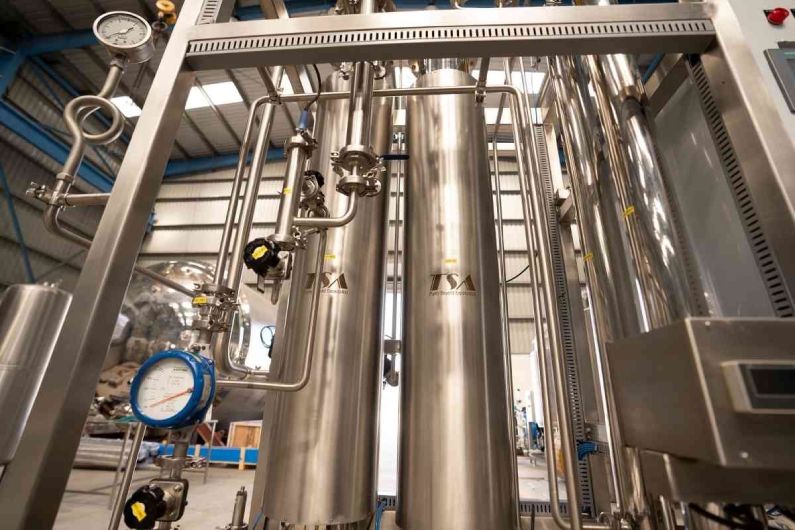
Steam sterilization via autoclaves is a confluence of microbiology, thermodynamics, materials science, and engineering. It’s not simply “turn up the heat and pressure and you’re done.” Each parameter temperature, pressure, steam quality, time, load configuration must be controlled, validated, and monitored rigorously.
 
Science provides the framework; design and validation make it reliable. For pharmaceutical manufacturers, understanding the science isn’t optional it’s what turns autoclaves from high-maintenance equipment into unwavering guardians of sterility and patient safety.


Share this post:

For 20 years, we’ve been the go-to problem-solvers for high-purity and injectable process applications in the pharma and biopharma industry. We are relentless about continuous process improvement and upskilling, elevating ourselves and our technology so you can get the job done more efficiently with cost optimisations. Use the form below to schedule a call back from our team.

Name(Required)
Address
This field is for validation purposes and should be left unchanged.

Hetal Panchal is the Vice President in Operations department of TSA Process Equipments (A Thermax Group Company) since 1 s t October 2012.

Holding a qualification in Production Engineering and 28 years of industry experience, he specializes in designing advanced equipment for the pharmaceutical sector. His expertise lies in optimizing production lines, improving efficiency, and ensuring compliance with regulatory standards.
Focused on innovation, he has developed systems that enhances productivity, minimizes downtime, and maintains product quality. Staying current with technological trends, they contribute to ongoing improvements in the industry.
His extensive experience has helped identify opportunities for innovation, streamlining operations and reducing costs. Through his specialized knowledge, more efficient manufacturing processes and higher-quality outputs in pharmaceutical production are delivered.

B.C. Mahesh is the Chairperson of TSA Process Equipment Pvt. Ltd. since Feb 2024.

B.C. Mahesh became a member of the Executive Council in August 2013. He is responsible for the Industrial Product Business (IPB), which consists of Process Heating, Absorption Cooling & Heating Solutions, Water and Waste Solutions, Air Pollution Control, Steam Engineering, Channel Business Group, International Business Group, and Enterprise Sales businesses.
As part of IPB, he also oversees the following wholly-owned subsidiaries
of Thermax – Danstoker, PT Thermax International Indonesia and Rifox.Mahesh joined Thermax as a graduate trainee in 1988 and handled the Materials function for various businesses, including global sourcing, till 1996.
He moved to the Power division(P&ES) and grew to the position of Sales Head and subsequently Head of Projects. He took over as the Head of the SBU for Medium Power Plants in 2009 and finally as Head of Power business in 2012.
Mahesh has worked with Thermax for over 30 years in many functions such as manufacturing, supply chain, sales and marketing, and project management, and has played a significant role in the strategy, expansion and diversification of the Power business.Mahesh completed his Mechanical Engineering from the Visvesvaraya Regional College of Engineering, Nagpur in 1988.

Vishal Mehra is the Director of TSA Process Equipment Pvt. Ltd. since Feb 2024.

Mr. Vishal Mehra is currently serving as the Strategic Business Unit Head for Water & Waste Solutions (WWS) at Thermax Limited. Additionally, he holds a directorial position at TSA Process Equipment, which is known for its expertise in ultra-pure and high-purity water technologies and was recently acquired by Thermax.With over 22 years of experience in the industry, Mr. Mehra’s professional focus includes water management solutions, advanced technology development, and business strategy.
His areas of interest encompass cutting-edge technology, growth strategies, organizational effectiveness, and development.
Mr. Mehra is well qualified in business management and strategy transformation, having completed the Senior Executive Program in Business Management and Strategy Transformation from London Business School. This advanced education supports his extensive experience and expertise in the field.

Sandeep Deshpande has been the Director of TSA Process Equipments Pvt. Ltd. since February 2024.

Currently, he serves as the Head of Corporate Finance and the Industrial Product Group at Thermax Limited. With over 21 years of experience in finance, he has developed expertise in financial consolidation, planning, reporting, costing, accounting, controlling and financial modeling.
Sandeep is a qualified Cost Accountant Company Secretary, and holds a diploma in IFRS and an advanced diploma in financial management from XLRI. He has extensive experience in financial operations, including financial planning, MIS, budgeting, controlling, audits, and cash flow management. His expertise also spans financial reporting, consolidation, mergers and acquisitions, due diligence, business restructuring, and implementing Internal Financial Control (IFC) and Enterprise Risk Management (ERM). Additionally, Sandeep has hands-on experience with Oracle systems, automation, digitization, and business analytics. He is passionate about driving good governance, improving financial reporting, and leveraging automation and digitization to enhance business analytics.

Rajiv Parikh is the COO of TSA Process Equipments (A Thermax Group Company) since April 2024.

Rajiv is a highly accomplished professional with extensive experience in the pharmaceutical and FMCG sectors, specializing in high-purity and process vessels. He played a key role in establishing TSA Process Equipments Pvt. Ltd., driving its growth and success. His deep technical expertise, combined with a strong understanding of client needs, has enabled him to deliver innovative solutions to complex industry challenges.

Throughout his career, Rajiv has excelled in leadership and sales, consistently launching cutting-edge products that have positively impacted the market. His ability to build lasting client relationships and offer tailored solutions has earned him a reputation as a trusted industry leader.

With a background in Mechanical Engineering, Rajiv blends technical proficiency with strategic vision. His contributions have shaped industry standards and positioned him as a key influencer in the pharmaceutical and FMCG sectors.

Apurva Shah is the CEO of TSA Process Equipments (A Thermax Group Company) since April 2024.

With a career spanning over 24 years, Apurva is the visionary CEO of TSA Process Equipments, where he has led the company to new heights in the High Purity & process equipment industry. A graduate in Mechanical Engineering from Mumbai University, followed by an MBA in Business Management from NMIMS, He brings a strong technical foundation combined with a sharp strategic mindset.

His expertise lies in formulating and executing strategies that drive growth and operational efficiency. Over the years, he has cultivated a deep understanding of market dynamics, positioning TSA Process Equipments for continued success in a competitive landscape.

Outside of his professional pursuits. He is an avid reader, with a particular interest in fiction novels, which fuel his creativity and broaden his perspective.