The Hidden Risks in Poorly Designed Multi-Tank CIP/SIP Systems

The Complexity of Multiple- Vessel Cleaning and Sterilization

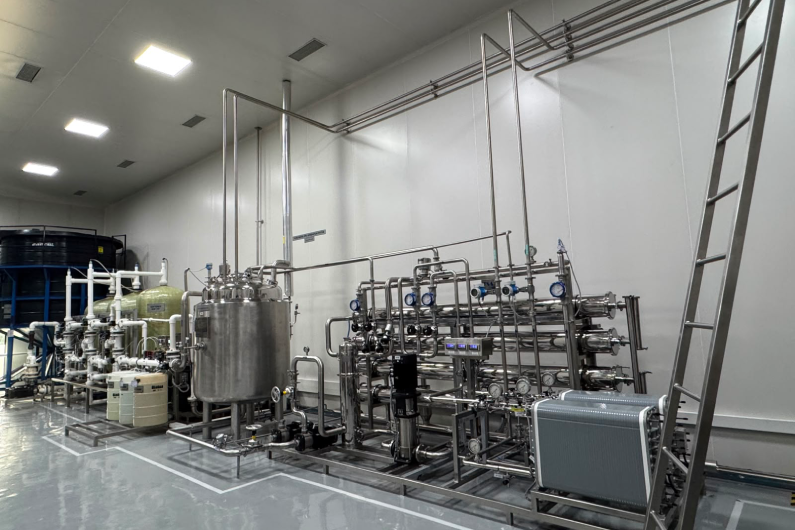
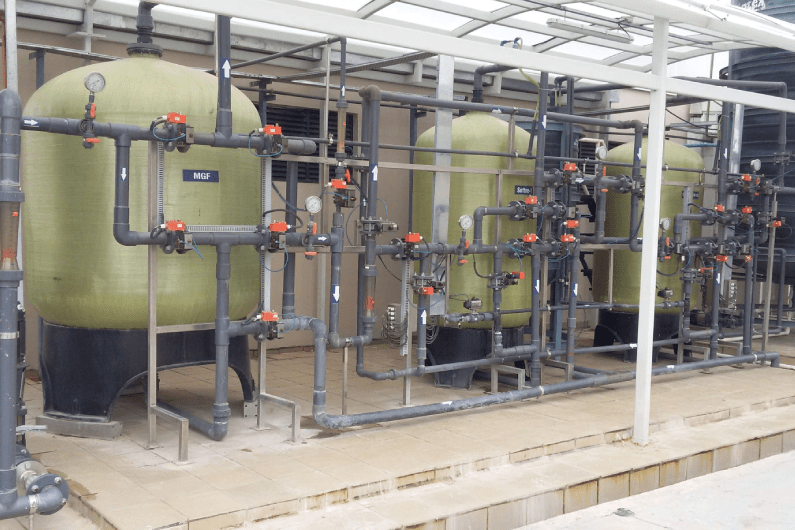
In pharmaceutical manufacturing, multiple -vessel CIP (Cleaning-in-Place) and SIP (Sterilization-in-Place) systems are favored for their efficiency and centralized operation. However, when not engineered with sufficient rigor, these systems can become significant sources of cross-contamination and regulatory non-compliance.

Each vessel within a multi-tank configuration often differs in geometry, working volume, product residue characteristics, and microbial risk profile. Applying a one-size-fits-all cleaning philosophy in such environments is inherently ineffective. Without deliberate system design that accounts for these variations, cleaning solutions and steam may not reach all product-contact surfaces uniformly. This can result in residual soils, microbial niches, or biofilm formation that directly compromise product safety and efficacy.

The risk escalates further when CIP/SIP systems are shared across multiple products or production lines. In the absence of proper pathway segregation, valve isolation, and controlled sequencing, the probability of cross-contamination increases exponentially, turning a centralized system into a critical quality vulnerability.


The Role of Validation in Safeguarding Process Integrity

Validation in CIP/SIP systems is not a regulatory formality—it is the primary mechanism for demonstrating that cleaning and sterilization processes consistently achieve their intended outcomes. Without robust validation, there is no objective evidence that critical parameters such as flow velocity, turbulence, chemical concentration, contact time, and sterilization temperature are being met across all connected equipment’s.

In inadequately validated systems, vessels may appear visually clean while still harbouring contaminants in dead legs, low-point drains, poorly sloped piping, or shadowed surfaces. This disconnect between perceived cleanliness and actual hygienic condition can lead to sterility test failures, batch rejections, costly investigations, and regulatory observations.

Comprehensive qualification—covering Design Qualification (DQ), Installation Qualification (IQ), Operational Qualification (OQ), and Performance Qualification (PQ)—is essential. These activities confirm that every tank, regardless of size or configuration, is effectively cleaned and sterilized within the shared CIP/SIP loop under worst-case operating conditions.


Engineering Excellence and Automation to Eliminate Risks

The complexity of multi-tank CIP/SIP systems demands precision engineering supported by intelligent automation. Effective systems rely on hygienic piping layouts, optimized flow paths, and well-designed valve matrices that ensure each vessel receives the correct cleaning and sterilization sequences.

Flow dynamics must be carefully engineered to maintain adequate velocity and turbulence throughout the system, preventing stagnation and ensuring consistent surface exposure. Inadequate automation or poor control logic can result in incorrect valve actuation, improper chemical dosing, or insufficient steam hold times—each of which undermines cleaning effectiveness and sterility assurance.

Advanced automation platforms with recipe management, real-time monitoring, alarms, and comprehensive data logging enable manufacturers to tailor CIP/SIP cycles to individual tanks and products. This adaptability ensures consistent outcomes while maintaining full traceability for audits and regulatory inspections.


Securing Multi-Tank CIP/SIP Performance

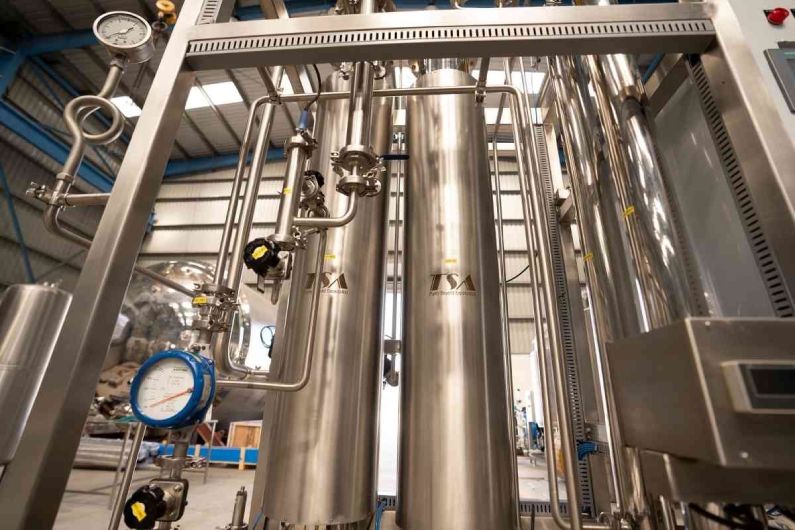
TSA addresses these challenges by delivering CIP/SIP systems purpose-built for multi-tank pharmaceutical applications. By applying ASME BPE-compliant hygienic design principles, TSA ensures optimized piping layouts, minimal dead legs, and uniform flow distribution across all vessels.

Each system incorporates sophisticated automation capable of customizing cleaning and sterilization sequences based on tank volume, geometry, and process sensitivity. Validation support is embedded from the design stage onward, providing customers with a structured and compliant pathway to meeting cGMP and global regulatory requirements.

Through the integration of robust engineering, advanced automation, and thorough qualification documentation, TSA enables manufacturers to scale operations confidently—without compromising cleaning efficiency, sterility assurance, or product integrity.


Conclusion

In today’s highly regulated pharmaceutical environment, where patient safety and product purity are non-negotiable, the consequences of poor CIP/SIP system design and inadequate validation are severe. A multi-tank CIP/SIP system lacking engineered precision, validated performance, and adaptive automation quickly becomes a liability rather than an operational advantage.

Organizations that invest in rigorously designed, well-validated multi-tank CIP/SIP systems transform cleaning and sterilization into reliable, audit-ready processes—safeguarding every batch, every time.

Top of Form
Share this post:

For 20 years, we’ve been the go-to problem-solvers for high-purity and injectable process applications in the pharma and biopharma industry. We are relentless about continuous process improvement and upskilling, elevating ourselves and our technology so you can get the job done more efficiently with cost optimisations. Use the form below to schedule a call back from our team.

Name(Required)
Address
This field is for validation purposes and should be left unchanged.

Hetal Panchal is the Vice President in Operations department of TSA Process Equipments (A Thermax Group Company) since 1 s t October 2012.

Holding a qualification in Production Engineering and 28 years of industry experience, he specializes in designing advanced equipment for the pharmaceutical sector. His expertise lies in optimizing production lines, improving efficiency, and ensuring compliance with regulatory standards.
Focused on innovation, he has developed systems that enhances productivity, minimizes downtime, and maintains product quality. Staying current with technological trends, they contribute to ongoing improvements in the industry.
His extensive experience has helped identify opportunities for innovation, streamlining operations and reducing costs. Through his specialized knowledge, more efficient manufacturing processes and higher-quality outputs in pharmaceutical production are delivered.

B.C. Mahesh is the Chairperson of TSA Process Equipment Pvt. Ltd. since Feb 2024.

B.C. Mahesh became a member of the Executive Council in August 2013. He is responsible for the Industrial Product Business (IPB), which consists of Process Heating, Absorption Cooling & Heating Solutions, Water and Waste Solutions, Air Pollution Control, Steam Engineering, Channel Business Group, International Business Group, and Enterprise Sales businesses.
As part of IPB, he also oversees the following wholly-owned subsidiaries
of Thermax – Danstoker, PT Thermax International Indonesia and Rifox.Mahesh joined Thermax as a graduate trainee in 1988 and handled the Materials function for various businesses, including global sourcing, till 1996.
He moved to the Power division(P&ES) and grew to the position of Sales Head and subsequently Head of Projects. He took over as the Head of the SBU for Medium Power Plants in 2009 and finally as Head of Power business in 2012.
Mahesh has worked with Thermax for over 30 years in many functions such as manufacturing, supply chain, sales and marketing, and project management, and has played a significant role in the strategy, expansion and diversification of the Power business.Mahesh completed his Mechanical Engineering from the Visvesvaraya Regional College of Engineering, Nagpur in 1988.

Vishal Mehra is the Director of TSA Process Equipment Pvt. Ltd. since Feb 2024.

Mr. Vishal Mehra is currently serving as the Strategic Business Unit Head for Water & Waste Solutions (WWS) at Thermax Limited. Additionally, he holds a directorial position at TSA Process Equipment, which is known for its expertise in ultra-pure and high-purity water technologies and was recently acquired by Thermax.With over 22 years of experience in the industry, Mr. Mehra’s professional focus includes water management solutions, advanced technology development, and business strategy.
His areas of interest encompass cutting-edge technology, growth strategies, organizational effectiveness, and development.
Mr. Mehra is well qualified in business management and strategy transformation, having completed the Senior Executive Program in Business Management and Strategy Transformation from London Business School. This advanced education supports his extensive experience and expertise in the field.

Sandeep Deshpande has been the Director of TSA Process Equipments Pvt. Ltd. since February 2024.

Currently, he serves as the Head of Corporate Finance and the Industrial Product Group at Thermax Limited. With over 21 years of experience in finance, he has developed expertise in financial consolidation, planning, reporting, costing, accounting, controlling and financial modeling.
Sandeep is a qualified Cost Accountant Company Secretary, and holds a diploma in IFRS and an advanced diploma in financial management from XLRI. He has extensive experience in financial operations, including financial planning, MIS, budgeting, controlling, audits, and cash flow management. His expertise also spans financial reporting, consolidation, mergers and acquisitions, due diligence, business restructuring, and implementing Internal Financial Control (IFC) and Enterprise Risk Management (ERM). Additionally, Sandeep has hands-on experience with Oracle systems, automation, digitization, and business analytics. He is passionate about driving good governance, improving financial reporting, and leveraging automation and digitization to enhance business analytics.

Rajiv Parikh is the COO of TSA Process Equipments (A Thermax Group Company) since April 2024.

Rajiv is a highly accomplished professional with extensive experience in the pharmaceutical and FMCG sectors, specializing in high-purity and process vessels. He played a key role in establishing TSA Process Equipments Pvt. Ltd., driving its growth and success. His deep technical expertise, combined with a strong understanding of client needs, has enabled him to deliver innovative solutions to complex industry challenges.

Throughout his career, Rajiv has excelled in leadership and sales, consistently launching cutting-edge products that have positively impacted the market. His ability to build lasting client relationships and offer tailored solutions has earned him a reputation as a trusted industry leader.

With a background in Mechanical Engineering, Rajiv blends technical proficiency with strategic vision. His contributions have shaped industry standards and positioned him as a key influencer in the pharmaceutical and FMCG sectors.

Apurva Shah is the CEO of TSA Process Equipments (A Thermax Group Company) since April 2024.

With a career spanning over 24 years, Apurva is the visionary CEO of TSA Process Equipments, where he has led the company to new heights in the High Purity & process equipment industry. A graduate in Mechanical Engineering from Mumbai University, followed by an MBA in Business Management from NMIMS, He brings a strong technical foundation combined with a sharp strategic mindset.

His expertise lies in formulating and executing strategies that drive growth and operational efficiency. Over the years, he has cultivated a deep understanding of market dynamics, positioning TSA Process Equipments for continued success in a competitive landscape.

Outside of his professional pursuits. He is an avid reader, with a particular interest in fiction novels, which fuel his creativity and broaden his perspective.