How Autoclaves Support Vaccine and Biologic Manufacturing

In the race to deliver safe, effective
vaccines and biologics, sterility is not just a regulatory requirement it’s a
moral one.
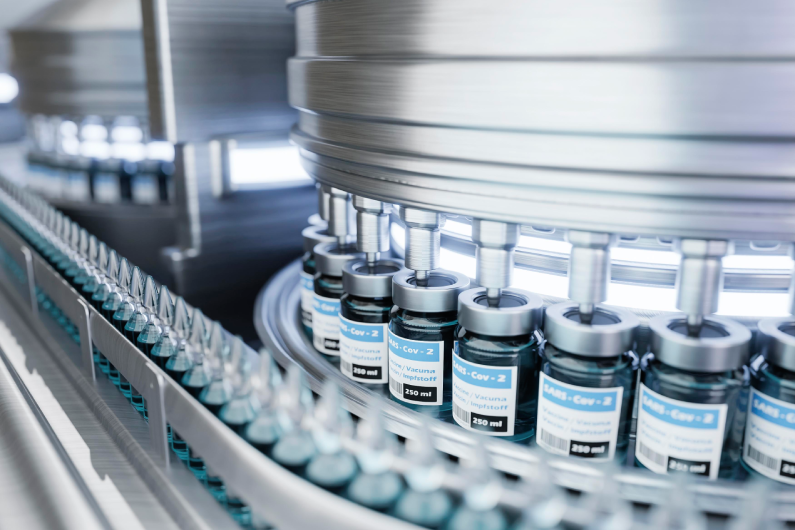
Every vial, every syringe, every element considered under Injectable class represents
the fragile interface between scientific innovation and patient safety. And
standing quietly at the heart of this process is one of the industry’s most
reliable guardians of sterility: the autoclave.

Autoclaves or steam sterilizers are far
more than stainless steel chambers that deliver high-temperature cycles. In
vaccine and biologic manufacturing, they embody precision engineering,
process long lasting reliability, and microbiological assurance
all working
in concert to protect product integrity.


1. The Sterility Challenge in Biologic
Production

Biologics and vaccines are inherently
delicate.
Unlike traditional small-molecule drugs, these products are derived from living
systems making them highly sensitive to contamination and environmental changes.
Even the slightest microbial breach can destroy batch worth millions and
compromise months of work.

Maintaining sterility, therefore, extends
far beyond cleanrooms it involves every vessel, filter, and connection that
comes in direct contact with the product.
This is where autoclaves provide their unshakeable role: ensuring that tools,
components, and process accessories entering the sterile zone are
microbiologically safe
.


2. Steam Sterilization: The Gold Standard of Assurance

Steam sterilization is unmatched for its lethality,
penetrative ability, and reliability
.
By using saturated steam at high pressure (typically 121°C–134°C),
autoclaves destroy even the most heat-resistant spores through protein
denaturation and cell membrane disruption.

For vaccine production, this ensures that:

  • Glassware, filling needles, and manifolds are sterile before contact with bulk drug substances.
  • Media preparation vessels and transfer lines remain free from microbial residues.
  • Reusable equipment and stainless steel components can safely re-enter aseptic areas after validated sterilization
    cycles.

In short, autoclaves act as the gateway
between non-sterile preparation areas and sterile processing environments
a
critical barrier that upholds aseptic integrity.


3. Autoclaves in Upstream and Downstream Operations

Autoclaves support multiple touchpoints in
biologic manufacturing, each with unique sterility demands:

Upstream Processing:
Culture media, glass bioreactors, and stainless fittings are sterilized to
prevent contamination of cell lines. Even minor bioburden in culture media can
alter protein expression, affecting product yield and quality.

Downstream Processing:
Filtration assemblies, chromatography columns, and filling line components are
sterilized to protect the purified biologic product. Autoclaves ensure that
every piece of equipment touching the drug substance is aseptic-ready.

Through validated sterilization cycles,
autoclaves maintain control across the entire manufacturing continuum
from seed vials to final formulation.


4. Engineering Precision for Sensitive Loads

Not all autoclave loads are created equal.
Delicate biologic-related equipment such as polymer tubing, membrane filters,
or elastomeric stoppers can deform under high heat if not properly controlled.

Modern autoclaves are engineered with:

  • Pre-vacuum cycles for efficient air
    removal.
  • Fine-tuned temperature control to
    prevent overheating of sensitive materials.
  • Load-specific recipes optimised for
    glassware, stainless steel, or mixed assemblies.
  • Pressure-balancing systems to avoid
    damage to sealed containers.

These design innovations transform
traditional steam sterilizers into intelligent sterilization systems  capable of handling complex and variable
biologic manufacturing needs.


5. Compliance,Validation, and Data Integrity

In the vaccine industry, compliance is inseparable from credibility.
Every sterilization cycle must be traceable, reproducible, and compliant with cGMP,
FDA, and EU Annex 1 standards.

Advanced autoclaves now feature:

  • Automated cycle validation with
    real-time temperature and pressure monitoring.
  • Data logging and audit trails
    aligned with 21 CFR Part 11 compliance.
  • Fo value calculations to verify sterilization
    efficacy.
  • Integrated alarms and reporting systems that ensure every cycle meets the defined lethality criteria.

Through such validation frameworks, manufacturers gain the assurance that every load  from media bottles to process tools  is sterile, compliant, and audit-ready.


6. Sustainability and Process Efficiency

With increasing focus on environmental responsibility, today’s autoclaves are designed for sustainability and energy efficiency.
Features like heat recovery systems, reduced water consumption, and steam recycling lower utility costs while maintaining sterility assurance.

In vaccine manufacturing, where thousands of sterilization cycles are performed annually, even small energy optimisations contribute to significant cost savings and sustainability goals  without compromising performance.


7. The Silent Partner in Every Safe Vaccine

Autoclaves rarely make headlines. Yet, without them, vaccine and biologic production would simply stop.
They sterilise the vessels that hold cultures, the tubing that transfers
solutions, and the tools that fill vials  forming the unseen infrastructure behind every safe injection.

As the world continues to advance in mRNA, cell, and gene therapies, autoclaves will evolve too  integrating automation, predictive maintenance, and smart control systems to meet the next frontier of bioprocessing.

Because in biologic manufacturing, sterility isn’t just a requirement  it’s
the foundation of trust between science and society.
And the humble autoclave keeps that trust intact, one cycle at a time.


References / Sources

  1. ISO 17665-1:2006 – Sterilization of Health Care Products: Moist Heat
  2. WHO TRS 986 Annex 2 – Guidelines on the Quality of Biological Products
  3. EU GMP Annex 1 (2022) – Manufacture of Sterile Medicinal Products
  4. PDA Technical Report No. 1 – Validation of Moist Heat Sterilization Processes
  5. ISPE Baseline Guide Vol. 3
    Sterile Manufacturing Facilities
  6. FDA Guidance for Industry – Sterile Drug Products Produced by Aseptic Processing (2004)
  7. Technical references from manufacturers such as Fedegari,
    Getinge, and Steris for autoclave design principles.
 

Share this post:

For 20 years, we’ve been the go-to problem-solvers for high-purity and injectable process applications in the pharma and biopharma industry. We are relentless about continuous process improvement and upskilling, elevating ourselves and our technology so you can get the job done more efficiently with cost optimisations. Use the form below to schedule a call back from our team.

Name(Required)
Address
This field is for validation purposes and should be left unchanged.

Hetal Panchal is the Vice President in Operations department of TSA Process Equipments (A Thermax Group Company) since 1 s t October 2012.

Holding a qualification in Production Engineering and 28 years of industry experience, he specializes in designing advanced equipment for the pharmaceutical sector. His expertise lies in optimizing production lines, improving efficiency, and ensuring compliance with regulatory standards.
Focused on innovation, he has developed systems that enhances productivity, minimizes downtime, and maintains product quality. Staying current with technological trends, they contribute to ongoing improvements in the industry.
His extensive experience has helped identify opportunities for innovation, streamlining operations and reducing costs. Through his specialized knowledge, more efficient manufacturing processes and higher-quality outputs in pharmaceutical production are delivered.

B.C. Mahesh is the Chairperson of TSA Process Equipment Pvt. Ltd. since Feb 2024.

B.C. Mahesh became a member of the Executive Council in August 2013. He is responsible for the Industrial Product Business (IPB), which consists of Process Heating, Absorption Cooling & Heating Solutions, Water and Waste Solutions, Air Pollution Control, Steam Engineering, Channel Business Group, International Business Group, and Enterprise Sales businesses.
As part of IPB, he also oversees the following wholly-owned subsidiaries
of Thermax – Danstoker, PT Thermax International Indonesia and Rifox.Mahesh joined Thermax as a graduate trainee in 1988 and handled the Materials function for various businesses, including global sourcing, till 1996.
He moved to the Power division(P&ES) and grew to the position of Sales Head and subsequently Head of Projects. He took over as the Head of the SBU for Medium Power Plants in 2009 and finally as Head of Power business in 2012.
Mahesh has worked with Thermax for over 30 years in many functions such as manufacturing, supply chain, sales and marketing, and project management, and has played a significant role in the strategy, expansion and diversification of the Power business.Mahesh completed his Mechanical Engineering from the Visvesvaraya Regional College of Engineering, Nagpur in 1988.

Vishal Mehra is the Director of TSA Process Equipment Pvt. Ltd. since Feb 2024.

Mr. Vishal Mehra is currently serving as the Strategic Business Unit Head for Water & Waste Solutions (WWS) at Thermax Limited. Additionally, he holds a directorial position at TSA Process Equipment, which is known for its expertise in ultra-pure and high-purity water technologies and was recently acquired by Thermax.With over 22 years of experience in the industry, Mr. Mehra’s professional focus includes water management solutions, advanced technology development, and business strategy.
His areas of interest encompass cutting-edge technology, growth strategies, organizational effectiveness, and development.
Mr. Mehra is well qualified in business management and strategy transformation, having completed the Senior Executive Program in Business Management and Strategy Transformation from London Business School. This advanced education supports his extensive experience and expertise in the field.

Sandeep Deshpande has been the Director of TSA Process Equipments Pvt. Ltd. since February 2024.

Currently, he serves as the Head of Corporate Finance and the Industrial Product Group at Thermax Limited. With over 21 years of experience in finance, he has developed expertise in financial consolidation, planning, reporting, costing, accounting, controlling and financial modeling.
Sandeep is a qualified Cost Accountant Company Secretary, and holds a diploma in IFRS and an advanced diploma in financial management from XLRI. He has extensive experience in financial operations, including financial planning, MIS, budgeting, controlling, audits, and cash flow management. His expertise also spans financial reporting, consolidation, mergers and acquisitions, due diligence, business restructuring, and implementing Internal Financial Control (IFC) and Enterprise Risk Management (ERM). Additionally, Sandeep has hands-on experience with Oracle systems, automation, digitization, and business analytics. He is passionate about driving good governance, improving financial reporting, and leveraging automation and digitization to enhance business analytics.

Rajiv Parikh is the COO of TSA Process Equipments (A Thermax Group Company) since April 2024.

Rajiv is a highly accomplished professional with extensive experience in the pharmaceutical and FMCG sectors, specializing in high-purity and process vessels. He played a key role in establishing TSA Process Equipments Pvt. Ltd., driving its growth and success. His deep technical expertise, combined with a strong understanding of client needs, has enabled him to deliver innovative solutions to complex industry challenges.

Throughout his career, Rajiv has excelled in leadership and sales, consistently launching cutting-edge products that have positively impacted the market. His ability to build lasting client relationships and offer tailored solutions has earned him a reputation as a trusted industry leader.

With a background in Mechanical Engineering, Rajiv blends technical proficiency with strategic vision. His contributions have shaped industry standards and positioned him as a key influencer in the pharmaceutical and FMCG sectors.

Apurva Shah is the CEO of TSA Process Equipments (A Thermax Group Company) since April 2024.

With a career spanning over 24 years, Apurva is the visionary CEO of TSA Process Equipments, where he has led the company to new heights in the High Purity & process equipment industry. A graduate in Mechanical Engineering from Mumbai University, followed by an MBA in Business Management from NMIMS, He brings a strong technical foundation combined with a sharp strategic mindset.

His expertise lies in formulating and executing strategies that drive growth and operational efficiency. Over the years, he has cultivated a deep understanding of market dynamics, positioning TSA Process Equipments for continued success in a competitive landscape.

Outside of his professional pursuits. He is an avid reader, with a particular interest in fiction novels, which fuel his creativity and broaden his perspective.